
You walk into a room and cannot remember why. A word you use every day disappears mid-sentence. You read the same paragraph three times, and none of it sticks. Pregnancy brain is one of the most talked-about symptoms of pregnancy and one of the least understood. This episode covers what researchers actually find when they test memory and thinking during pregnancy. Learn why this feels more dramatic than what researchers can actually measure, and how long it lasts. Importantly, find out why pregnancy brain looks less like a decline and more like an upgrade. Plus, practical strategies that target what pregnancy brain affects.
Listen Now
This episode is made possible with support from our sponsors. I appreciate your support for the brands that help power this podcast.
Article and Resources
What Pregnancy Brain Actually Feels Like
Pregnancy brain, or baby brain, is the term for the forgetfulness, distraction, and mental fog that many expecting moms notice during pregnancy. After your baby arrives, the same experience often gets called mom brain or momnesia.
The experience is specific, and it looks pretty similar from one expecting mom to the next. You go to another room and forget why you came. A common word disappears in the middle of a sentence. An appointment you confirmed that same morning slips your mind completely. Then you set your keys down somewhere and spend ten minutes retracing your steps. These examples all have something in common. They involve failing to remember to do something, or failing to retrieve something you already know. Pregnancy brain is very common. Figures cited consistently across the literature land somewhere between 50-80%. So if you are dealing with this, you are not alone.
When Pregnancy Brain Starts and When It Peaks
The timeline is more consistent than you might expect. A meta-analysis found that measurable differences in general cognitive function, memory, and executive function develop mainly during the first trimester. Those differences are then most pronounced in the third trimester. That matches what many women describe. The fog often shows up early, alongside the fatigue and nausea of the first trimester. It tends to feel more prevalent in the third trimester, when sleep is most disrupted, and you have the most on your mind.
What Cognitive Testing Actually Finds
Here is where the research gets interesting, because it does not all point in the same direction. In the meta-analysis above, pregnant women scored lower than controls on general cognitive functioning, memory, and executive functioning. In other research, no significant differences in cognitive change as a function of pregnancy or motherhood were found. Late pregnancy was associated with a decline on one of four measures. The authors concluded that the hypothesis of persistent cognitive deterioration was not supported, and they suggested that earlier positive findings may reflect biased sampling. Both of those are careful studies. They disagree in part because they measured different things. This is a case where the overall evidence is mixed, and the useful answer requires more specifics.
Which Parts of Memory Change and Which Do Not
A 2025 systematic review gives us the specifics we need. Instead of asking whether memory declines, they broke memory apart and examined each type separately. The results are far more specific than the phrase pregnancy brain suggests.
Prospective memory shows the clearest effect. Prospective memory means remembering to do something in the future. Returning a call, taking a vitamin, mailing a form. This is the one domain where pregnant women consistently underperform. In one study, pregnant women were less likely than controls to remember to phone the lab on a scheduled day. They were also less likely to mail an envelope back the day after a visit.
Short-term memory shows no effect. Across studies using a standard digit span task, pregnant women and controls showed no difference. In a digit span task, you hear a list of numbers and repeat them back. It measures how much you can hold in your mind at one time. Implicit memory is also preserved, which covers the skills and habits you perform without conscious effort. This is everything you know how to do without thinking about it, like driving, typing, or riding a bike. Visual and spatial memory is also not reduced, so pregnancy has not been linked to any decline in recalling faces, objects, or images.
Results across the whole literature for verbal recall and verbal recognition are mixed. But in higher-quality studies, verbal recall and verbal recognition were unaffected. Intelligence and planning show no effect. Attention, processing speed, and cognitive flexibility remain inconclusive.
What does all of this mean? Taken together, pregnancy brain is not a broad decline in your thinking. It is a narrow effect on remembering to do things. The problem is that you rely on it constantly.
The Gap Between How It Feels and How It Measures
What women describe and what the tests find are two very different things. Consider one study that measured memory in pregnant and non-pregnant women in two ways. In the lab, the pregnant women performed just as well as everyone else. On the questionnaires, they reported problems across the board. Their performance slipped only in real life, on tasks that required remembering to do something later.
One more finding is worth noting. Research also shows that sleep deprivation predicts how forgetful a pregnant woman reports feeling, but it does not predict how she actually performs on memory tests. Poor sleep appears to shape the feeling more than the function.
Why That Gap Exists
So why do you feel so much more forgetful than the testing says you are? There are four likely reasons, and none of them mean you are imagining it.
The first is attention, not memory. A review of this research suggests that the cognitive effort involved in a memory task may underlie the impairment. Pregnant women may remember a task perfectly well, but then they assign it a low priority against everything else competing for their attention. You are preparing a nursery, finishing projects at work, and attending prenatal appointments. This is not a failure to remember. You are triaging what actually needs your attention.
The second is expectation. Pregnancy brain is a cultural expectation before it is ever a personal experience. Once you expect to be forgetful, you notice and attribute your lapses differently. Everyone loses a word occasionally. When you are pregnant, you attribute that lapse to pregnancy brain rather than being human.
The third is sleep. Sleep drives memory consolidation, and pregnancy disrupts sleep in many ways.
The fourth is all of the other contributing factors that come with pregnancy. Fatigue and stress both affect concentration in anyone, whether or not you are pregnant. One review of pregnancy memory research found that pregnant women are significantly impaired on some memory measures but not others. The affected measures were those that placed high demands on executive control. Executive control is the part of your brain that manages everything. It holds your plan, directs your attention, and allows you to switch between tasks. Think of executive control as the manager, not the filing cabinet. In other words, the tests pregnant women struggled with were the ones that demand the most from the manager. That is exactly what you would expect when attention is already stretched across a dozen things.
What Brain Imaging Shows
Alongside cognitive testing, a substantial body of brain imaging research now gives us more information. Let’s start with what drives this. Pregnancy involves massive hormonal changes and these hormones act on your brain, not just your body.
In a landmark study, researchers scanned women before conception and again after birth. To separate pregnancy itself from the experience of becoming a parent, they also scanned first-time fathers, men without children, and women who did not become pregnant. Only the women who had been pregnant showed changes. Gray matter volume decreased in regions involved in social cognition. Social cognition is how you read other people. Their emotions, their intentions, and what they need from you.
When researchers rescanned participants two years later, most reductions persisted, with a partial recovery in one cluster in the hippocampus. The hippocampus is central to memory. Newer work has built on this research. A precision imaging study scanned one first-time mother 26 separate times, from preconception through two years postpartum. Gray matter volume and cortical thickness decreased across pregnancy. Gray matter is where your brain does its actual processing. Cortical thickness is how thick the outer layer of that processing tissue is. At the same time, white matter microstructural integrity increased. White matter is the wiring that connects those processing areas to each other. Think of gray matter as the rooms in a house and white matter as the wiring running between them. During pregnancy, the rooms get smaller and the wiring gets better. That matters, because losing tissue while improving connections is not what deterioration looks like.
A much larger study then followed 179 women. Gray matter volume decreased by up to 4.9% across roughly 94% of the brain. It then partially recovered after birth. What matters is that the extent of change tracked with estrogen levels and maternal attachment. That connects this research directly to bonding with your baby.
Put those three studies together, and we have a consistent picture. Your brain changes measurably during pregnancy. Those changes concentrate in the areas involved in reading and responding to other people. Plus, these changes are tied to pregnancy hormones rather than the experience of parenting.
What the Brain Scans Do Not Explain
None of the research actually establishes that these structural changes cause your forgetfulness. Researchers have noted that they could only speculate that the brain changes contribute to the memory deficits associated with pregnancy. The imaging shows your brain is reorganizing, specifically in regions tied to social processing. It does not tell us why you cannot find your keys.
When we’re talking about a decrease in gray matter, that sounds very scary. Before you start worrying, you need to know researchers don’t interpret it as damage. They view it as synaptic pruning. This is the same refining process that reshapes your brain during adolescence. Pruning helps the brain become more efficient at whatever it needs to do next. This is good news because your brain isn’t deteriorating; it is preparing you for motherhood.
Where Pregnancy Brain Looks Like an Upgrade
If pregnancy reorganizes the brain around social processing, then testing women on word lists may be measuring the wrong thing entirely. When researchers test measures that apply to being a new mother, we see a different picture.
In one study, women in their third trimester completed a spatial associative memory task and were compared to women who had never been pregnant. A spatial associative memory task tests whether you can remember what goes where. Researchers show you images in specific locations, then later ask you to recall which image was where. The task included two kinds of images. Some were relevant to babies and parenting, and some were relevant to ordinary adult life. Pregnant women showed better retention on this task overall when they were tested again four weeks later. The researchers framed their findings directly against the idea of baby brain.
Another study found that pregnant women were better than non-pregnant women at recognizing faces they had seen only once. The effect was strongest for male faces of their own racial group. Researchers proposed this as a protective adaptation rather than a curiosity. This lines up with everything else we have covered. Brain imaging shows pregnancy reorganizes the regions that handle social processing. This study tested a social processing skill and found it sharper. Two completely different research methods point to the same conclusion.
A 2025 review pulled this literature together and argued for reframing mom brain around adaptive cognitive enhancement rather than deficit. Researchers have also proposed the term matrescence for the lifetime impact of motherhood on the brain, much as adolescence describes the transition into adulthood. That comparison is not accidental. It is the same synaptic pruning we talked about, the process that reshapes the adolescent brain, happening again in adulthood.
I know we have discussed a lot of research. A coherent theory underlies all of this. Pregnancy carries enormous metabolic demands, so energy gets reallocated. Functions that are not essential right now receive less. Functions that support recognizing your baby, reading their cues, and responding to them receive more. On this view, the forgetfulness is not a malfunction. It is the price you pay to upgrade your brain to be a better mom.
Mom Brain and the Postpartum Period
While a lot of pregnancy symptoms disappear after your baby is born, mom brain is not one of them. Research that compared memory during pregnancy and the postpartum period found a mixed picture. Of the seven studies, four found the decline persisted for weeks or months. Two found it resolved after birth. One study found an interesting difference. New moms were more likely to do something late than to forget it entirely. That is a very different problem than losing track of it altogether.
Realistically, the postpartum period stacks several things on top of each other. Your sleep is fragmented. Attention is split with an infant who requires continuous monitoring. On top of that, your mental load has gone up. It is also worth remembering that the reorganizing we talked about earlier is still underway. Your brain does not finish rewiring the day your baby is born. Some of that work continues to move through the first year. On the imaging side, research found structural changes still present two years after birth. Another study found partial recovery within months.
These two findings are easier to reconcile than they look. They were measuring different things on different timelines. The rebound happens fairly quickly after birth. It just does not go all the way back to where you started. Some of what changes during pregnancy recovers, and some of it seems permanent. The bottom line is that if you still have a bit of mental fog after you have your baby, this is not a sign that something’s wrong. It’s entirely normal.
What Happens to Your Brain in the Long Term
So far, we’ve talked about what happens to your brain during pregnancy and postpartum, but what about long term? Researchers analyzed brain scans from 12,021 middle-aged women. Women who had given birth showed less evidence of brain aging than women who had not, even after accounting for common genetic variation and other confounding factors. A follow-up analysis found the effect concentrated in striatal and limbic regions. The striatum sits deep in the brain and handles motivation, reward, and habit. The limbic regions handle emotion and memory. Both are heavily involved in caregiving. The strongest signal was in the accumbens, a region central to reward processing and to maternal behavior. The bottom line is that even if you have some deficits short-term, there are benefits in the long run.
Does a Second Pregnancy Make It Worse?
You may be wondering if effects are compounded with multiple pregnancies. A 2026 study examined how a second pregnancy affects the brain compared to a first. Rather than simply repeating what the first pregnancy did, a second pregnancy produced a distinct pattern. Some first-pregnancy effects were fine-tuned further. Other networks changed in ways the first pregnancy did not produce at all.
This study looked at brain structure rather than at memory performance, so it does not tell us how second-time mothers feel day to day. What it does tell us is that if you had pregnancy brain in your first pregnancy, there’s no research showing that it’s going to be worse the second time around.
Strategies That Actually Help
We’ve covered a lot of research, and you should have a better idea of why this happens and the benefits it can give you as you go into motherhood. None of this makes pregnancy brain less frustrating. Let’s go through a few strategies that can help you manage this.
Get It Out of Your Head and Into a System
I am a big fan of the brain dump and writing things down. Getting things into a notebook, a notes app on your phone, or a calendar takes them out of your brain. Then it’s one less thing you need to mentally remember. This works because prospective memory, remembering to do something later, is the one function that consistently takes a hit. Every item you write down is one your brain no longer has to remember.
Build Triggers Into Your Routine
Habits run without memory. The easiest way to build a habit is to attach it to something you already do. If you make tea every morning, keep your prenatal vitamin next to your tea. This solves the problem of forgetting to take your prenatal vitamin. The more of your routine that runs automatically, the less you have to actively remember. This is called habit stacking, and the formula is simple. After I do the thing I already do, I will do the new thing. That means after I pour my morning tea, I take my prenatal vitamin. After I plug in my phone at night, I check tomorrow’s calendar. Attaching the new habit to an existing one means you are not relying on memory to trigger it.
Protect Your Sleep
Sleep supports memory, mood, and concentration, and pregnancy interferes with all three. Improving your sleep is one of the highest-value things you can do, and there is a full episode on how to improve it.
Do Your Hardest Thinking When You Are Sharpest
If you have cognitively demanding work, schedule it when you are sharpest rather than when it lands on your calendar. If you are not a morning person, do not save your hardest thinking for 8:00 in the morning. Steady blood sugar helps too, so pay attention to how what you eat affects your focus across the day.
Offload What You Can
If a task can go to someone else, delegate. Your partner, family, and friends can absorb more than you probably ask them to. Getting comfortable with this now is also a genuinely useful skill for life with a newborn. Don’t try to do everything by yourself.
You should also take a look at what can simply be cut. Do you have to-do items on your list that are not really necessary? Are not necessary right now? It is easy to spend hours researching things that do not need researching yet. If you are in your first trimester, you do not need to have an opinion about diapers. Your attention is finite right now, so spend it on what is actually relevant to where you are.
Closing Thoughts
Here is what you need to take away from everything we have discussed today. Pregnancy brain is real, and it is far more specific than it feels, hitting mainly your ability to remember to do things. Meanwhile, your brain is reorganizing around the ability to recognize your baby and read what they need, and when researchers test that instead of word lists, pregnant women often do better rather than worse. Your brain is changing, but in ways that will help you better navigate being a mother.
Talking to Your Doctor or Midwife
As always, if anything is bothering you during pregnancy, you should bring it up with your doctor or midwife at a prenatal appointment. This is especially true if brain fog feels sudden or severe rather than gradual. Also mention it if it arrives alongside symptoms like dizziness, shortness of breath, heart palpitations, or headaches. Several common pregnancy conditions can affect concentration and memory. Low iron levels leading to anemia are near the top of that list. Thyroid problems, blood pressure concerns, sleep apnea, and fatigue are all part of that picture.
Both depression and anxiety affect concentration and memory, and both are common during pregnancy and after birth. If the fog comes with low mood, persistent worry, or a sense that you are not functioning the way you normally do, please talk with your doctor or midwife. They would much rather hear about it and rule things out than have you assume it is just pregnancy brain and manage on your own.
WANT MORE LIKE THIS?
Get every episode, ad-free, with 200+ premium only deep dives.
When a question comes up during your pregnancy, the answer is probably already a Pregnancy Podcast episode. Premium members get full access to every episode, plus every new episode ad-free.
Explore Premium7-day refund guarantee. No questions asked.
Thank you to the brands that help power this podcast.
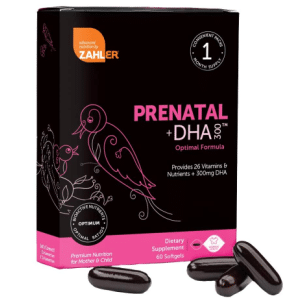
Zahler Prenatal +DHA
Choosing the right prenatal vitamin is one of the most important things you can do for a healthy pregnancy, and the Zahler Prenatal +DHA is my top recommendation. It is made with high-quality nutrients like the active form of folate and bioavailable iron, plus omega-3s you will not find in most other prenatal vitamins. Save 35% off in the month of September.
Save 35% in September
VTech RM6756 Video Baby Monitor
The VTech RM6756 is designed for parents who want flexibility at home and away. It has color night vision, a 5.5-inch HD color LCD screen, and ultra-wide 135-degree viewing.
- Color night vision, 5.5-inch HD LCD
- Ultra-wide 135-degree viewing
- Free live remote access, no subscription fees

8 Sheep Organics
8 Sheep Organics makes 100% clean, natural pregnancy products. From skin care to relief for common pregnancy symptoms, every product comes with a 100-day Happiness Guarantee.
Save 10% at 8 SheepThis post includes sponsored content and affiliate links. Some brands compensate me for featuring their products, and I earn a commission on affiliate purchases. Your support helps power the Pregnancy Podcast.

