
The CDC recently made significant changes to the childhood vaccination schedule, prompting widespread coverage and discussion. Vaccines are a complex and often polarizing topic. For expecting parents, clickbait headlines can feel overwhelming or confusing. This episode breaks down how these recommendations are developed and what actually changed in the vaccine schedule. Learn how the revised recommendations influence pediatric care, insurance coverage, and state requirements, and what this means in practical terms as you navigate vaccine decisions for your baby.
Listen Now
This episode is made possible with support from our sponsors. I appreciate your support for the brands that help power this podcast.
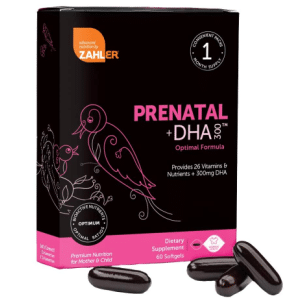
40% off the Zahler Prenatal +DHA on Amazon with code ZAPREN40. The Zahler Prenatal +DHA is made with high-quality nutrients like the active form of folate and bioavailable iron. Plus, it includes essential nutrients like omega-3s that you will not find in most other prenatal vitamins. (40% off through 1/31/26. The current promo code is always available here.)
Become a Pregnancy Podcast Premium member or log in to access all articles and episodes ad-free.
Article and Resources
How Vaccine Recommendations Develop
Before discussing the changes themselves, it is important to understand how vaccine recommendations are developed and how they work in practice. In the United States, the Advisory Committee on Immunization Practices (ACIP) develops vaccine recommendations. These recommendations are based on multiple factors, including a vaccine’s safety and effectiveness, the severity of the disease it prevents, and the disease’s prevalence without vaccination. When determining vaccine timing, the ACIP considers when a baby’s immune system will respond most effectively while also ensuring protection as early as possible. The Centers for Disease Control and Prevention (CDC) then uses these recommendations to create the official U.S. immunization schedules.
These organizations focus on protecting public health at the national level. Their guidelines inform recommendations from professional bodies such as the American Academy of Pediatrics (AAP) and the American College of Obstetricians and Gynecologists (ACOG). These recommendations, in turn, shape the advice you receive from your healthcare provider. Typically, once the CDC adds a vaccine to the schedule, clinicians broadly recommend it, though implementation can evolve over time. If the CDC removes a vaccine from the schedule, physicians’ attitudes may change, though the shift is not immediate. Understanding how these recommendations develop helps you have informed conversations with your doctor, midwife, or pediatrician and make the best decisions for you and your baby.
Enforcing Vaccines and Mandates
As you navigate vaccines for your child, consider how vaccination policies may affect your family, depending on where you live. In the United States, every state has legislation governing vaccination requirements. States enforce these laws by requiring proof of vaccination for children to attend public or private daycare or school. In states with vaccine mandates, a child may be denied entry to school if their vaccination records are not up to date.
Currently, twenty-nine states and Washington, D.C., allow exemptions for individuals with religious objections to vaccination. Fourteen states permit exemptions for religious, personal, or philosophical reasons. Five states do not allow any non-medical exemptions. You can view each state’s specific requirements and available exemptions here.
Depending on your state, declining vaccines may affect your child’s ability to attend school or daycare. In states like California, where vaccination requirements are strict, you will have difficulty enrolling your child in school if they are not up to date with the CDC vaccination schedule. These restrictions generally do not impact families who choose to homeschool.
Changes to the Childhood Vaccine Schedule
Federal health officials announced revisions to the childhood vaccine schedule that reduce the number of diseases covered by routine childhood immunizations. Under the updated schedule, routine vaccines now protect against 11 diseases, down from 17. The Centers for Disease Control and Prevention updated its immunization schedule to reflect these changes, and the update is effective immediately.
How the Schedule Is Now Organized
Under the revised framework, the CDC continues to organize childhood vaccines into three distinct categories.
Vaccines Recommended for All Children
The first category includes immunizations recommended for all children. I am not going to go into each of these in detail, but this category includes:
- Diphtheria, tetanus, acellular pertussis (whooping cough)
- Haemophilus influenzae type b (Hib)
- Pneumococcal conjugate (PCV15, PCV20)
- Inactivated poliovirus
- Measles, mumps, rubella (MMR)
- Varicella (chicken pox)
- Human papillomavirus (HPV)
Vaccines Recommended Based on Risk Factors
The second category includes immunizations recommended for certain high-risk groups or populations. This includes:
- Respiratory syncytial virus: recommended if the mother did not get the vaccine during pregnancy. High-risk children, such as those with chronic lung disease, should receive a second dose at ages 8 to 19 months
- Hepatitis B: recommended for infants born to women who tested positive for the hepatitis B virus or whose status is unknown.
- Dengue: recommended ONLY if living in areas with endemic dengue AND with a laboratory confirmation of previous dengue infection. Dengue is not endemic in the United States.
- Meningococcal ACWY: Recommended for high-risk groups (e.g., those with anatomic or functional asplenia or HIV infection), those traveling to countries with hyperendemic or epidemic meningococcal disease, and first-year college students living in residential housing, vaccination is recommended.
- Meningococcal B: recommended for high-risk groups, e.g., with anatomic or functional asplenia, and during outbreaks.
- Hepatitis A: recommended for international travel to areas with high or intermediate hepatitis A endemicity.
These risk factors do not apply to most children. If your child is at high risk for any of these conditions, you should discuss this with your pediatrician.
Vaccines Based on Shared Clinical Decision-Making
The third category includes immunizations based on shared clinical decision-making. These are vaccines that parents and healthcare providers decide on together based on individual circumstances. This includes:
- Rotavirus
- COVID-19
- Influenza
- Hepatitis A
- Hepatitis B
- Meningococcal ACWY
- Meningococcal B
One point that has caused confusion is that the CDC did not remove any vaccines from availability. Instead, some vaccines shifted categories or timing. All vaccines in all three categories remain available if you would like your child to receive them, and your insurance will cover them.
Why the Changes
These are not the first changes to vaccine guidance during this administration. The CDC previously updated COVID-19 vaccination recommendations, including no longer recommending the COVID-19 vaccine for healthy children and pregnant women. They also shifted the timing of the hepatitis B vaccine from birth to two months of age. There had been considerable speculation that more significant updates to the childhood vaccine schedule might be coming.
Federal officials have also said that one reason for revising the childhood vaccine schedule was a broader review of immunization schedules used in other developed countries. According to the U.S. Department of Health and Human Services, the United States is a global outlier in both the number of diseases it includes in its routine childhood vaccine schedule and the total number of recommended doses. The revised schedule more closely resembles that of countries such as Denmark, which immunize children against fewer diseases while maintaining strong child health outcomes.
It is also important to zoom out and look at the broader context. Vaccine skepticism increased nationwide in the wake of the COVID-19 pandemic. For many parents, concerns about the COVID-19 vaccine and how that was handled influenced attitudes about other vaccines. One possible goal may be to reduce overall vaccine skepticism by reducing the number of vaccines routinely recommended for all children.
The public response to these changes has been mixed, as have responses from professional medical organizations. For many people, reactions depend largely on how these updates align with their broader views on vaccines. Political perspectives also shape how people perceive the changes, particularly given that they were rolled out under the current administration. Robert F. Kennedy Jr., the Secretary of Health and Human Services, is a polarizing figure in vaccine discussions. Some have characterized him as a longtime vaccine skeptic, while others view his approach and recent changes as a welcome shift in public health policy. This broader context influences how news outlets communicate the schedule updates and how people interpret and discuss it.
Among professional organizations, the most notable response has come from the American Academy of Pediatrics, which has criticized the changes, describing them as dangerous and unnecessary. The AAP has stated that it will continue to issue its own evidence-based recommendations. This response matters because the AAP plays a major role in shaping how pediatricians counsel families. As a result, many parents may continue to receive guidance that reflects AAP recommendations, even as the CDC schedule evolves, which could lead to differences in how these changes are implemented in everyday pediatric care.
Key Takeaways
Vaccines are a challenging and highly nuanced topic. It is completely understandable to feel overwhelmed, especially when you are weighing potential risks, benefits, and unknowns for your baby. I have spent hundreds of hours researching vaccines over the years, both for this podcast and to make informed decisions for my children. Vaccines are one of the most difficult topics to cover.
It is critical for you to know that decisions about vaccines do not need to be all or nothing. It isn’t either you decline all of them or get every single one. In addition, you always have the option to delay vaccination. Taking them one step at a time can make the process feel much more manageable. The CDC does not recommend the first vaccine until two months of age, so if you are currently pregnant, you have a lot of time.
I encourage you to focus on the vaccines recommended at your baby’s next pediatrician appointment and review them individually. This is a nuanced topic, and you should consider both the science and evidence and your personal context.
Evaluating Vaccines
I take a systematic and evidence-based approach when evaluating any vaccine. My goal is to understand both the science and the context. I start by asking several key questions:
- What are the risks of the illness the vaccine prevents?
- What is the history of the vaccine?
- What ingredients are in it?
- How effective is it?
I also encourage you to consider other personal factors. This includes questions like:
- What is the likelihood of exposure where you live or places you plan to travel?
- What is the overall health of you or your child?
- Is the illness more common during certain seasons?
If you have questions about vaccines or want more information, please send them in. I am happy to dig deeper into the research and address listener questions in future episodes. And as always, I trust that you are discussing any questions or concerns with your pediatrician.
My goal with this episode is to help you feel oriented, not overwhelmed. These changes will continue to be discussed, interpreted, and implemented over time. Having a basic understanding of how vaccine recommendations are made and used can help you navigate pediatric care with more confidence. The goal is for you to make decisions based on evidence rather than fear and to be confident in the choices you make for your family.
Thank you to the brands that help power this podcast.
Save 40% off the Zahler Prenatal +DHA on Amazon with the code ZAPREN40.
Zahler goes above and beyond using the latest scientific research to formulate their Prenatal +DHA with high-quality nutrients like the active form of folate and bioavailable iron. Plus, it includes essential nutrients like omega-3s that you will not find in most other prenatal vitamins. Not all prenatal vitamins are created equal. This vitamin is carefully formulated with the nutrients you and your baby require in the optimal ratios for absorption, metabolism, and safety. (40% off through 1/31/26. The current promo code is always available here.)

