
Your doctor or midwife will track your weight throughout pregnancy. For many expecting moms, stepping on the scale is a source of anxiety. This episode breaks down healthy pregnancy weight gain, including where the guidelines come from, how much weight is recommended for your body, and where all that weight actually goes. We will examine what the research shows, including the fact that most women do not gain within the recommended ranges. You will learn why lifestyle changes have a smaller effect than you might expect. Hear why the number on the scale is only one small piece of your health, and what you should actually focus your energy on.
Listen Now
This episode is made possible with support from our sponsors. I appreciate your support for the brands that help power this podcast.
Article and Resources
Why Your Care Provider Tracks Your Weight
Humans like metrics. Measurements let us assess where things stand and track changes over time. In medicine, metrics are especially useful because they help providers set guidelines and monitor your health from one visit to the next. Weight is one of the simplest metrics there is. During pregnancy, your care provider uses your weight to monitor your health and your baby’s, and to watch for signs of certain complications.
Gaining a healthy amount of weight matters because both ends of the spectrum carry some risk. Gaining too little or too much during pregnancy is associated with low and high birth weights, preterm delivery, gestational diabetes, preeclampsia, cesarean birth, and postpartum hemorrhage. A large meta-analysis of more than 1.3 million women confirmed that gaining below the recommendations raised the risk of a smaller baby and preterm birth, while gaining above them raised the risk of a large baby, macrosomia, and cesarean delivery. The good news is that your risk for these complications is lower when you gain within a healthy range. That is really the whole point of tracking your weight. It is not about hitting a perfect number. It is about staying in a range that supports a healthy pregnancy.
Understanding BMI and Its Limits
Before we get into pregnancy-specific guidelines, it helps to understand body mass index, because the recommendations for weight gain are built around it. BMI is a simple calculation that estimates body fat based on your height and weight. It has been widely used in medicine for decades, largely because it is quick and easy to calculate.
Life insurance companies actually created the first weight tables as a way to assess mortality risk. A mathematician developed the underlying calculation back in the 1800s, but the term body mass index was not coined until the 1970s. BMI divides your weight in kilograms by your height in meters squared. If you want to find yours, you can use this calculator.
The four BMI categories are:
- Underweight is a BMI below 18.5.
- Normal weight is a BMI of 18.5 to less than 25.
- Overweight is a BMI of 25 to less than 30.
- Obese is a BMI of 30 or higher. This is further classified into class 1 (30-35), class 2 (35-40), and class 3 (40 or greater).
Here is the important part. BMI is far from a perfect measure of your health, and it has limitations. Since it only looks at height and weight, it can overestimate body fat if you are muscular or underestimate it if you have lost muscle. It also says nothing about where you carry fat, which matters for health risk. There is evidence that other metrics, like waist circumference, can predict health risks just as well or better. People have proposed several alternative calculations over the years, but so far none have replaced BMI in everyday practice.
The medical community itself has increasingly acknowledged these shortcomings. In 2023, the American Medical Association adopted a new policy recognizing the significant limitations of BMI. The AMA pointed out that BMI is based largely on data from previous generations of non-Hispanic white populations and does not account for differences across sex, age, race, and ethnicity. As a result, the AMA now recommends that BMI be used alongside other measures of health, not on its own.
The fact that BMI is imperfect does not mean that carrying excess weight has no health consequences. Even with its flaws, BMI is still a useful screening tool that flags risk at a population level. A higher BMI raises certain risks, and your BMI category is not a full picture of your health.
Obesity Is Common, and It Is a Real Health Concern
It is worth being straightforward about how significant this is, because obesity is both common and serious. In the United States, the prevalence of obesity among adults is 40.3%, according to the most recent national data. That means roughly four in ten adults have a BMI in the obese range. One encouraging note is that the rate has not increased significantly over the past decade, so the long climb appears to have leveled off. Still, the numbers are high, and the health impact is real.
Obesity is classified as a chronic disease. According to the CDC, it increases the risk of hypertension, type 2 diabetes, coronary heart disease, stroke, and certain cancers. This is not just a problem in the U.S. The World Health Organization reports that worldwide, about one in eight people are living with obesity, and that figure has more than doubled since 1990.
It is worth clarifying why these two numbers can seem to point in different directions. The U.S. rate has leveled off over the past decade, while the global figure has more than doubled over a much longer period since 1990, driven largely by rising rates in other countries. The same WHO source reports that in 2021, a higher-than-optimal BMI was linked to an estimated 3.7 million deaths worldwide from conditions like cardiovascular disease, diabetes, and cancer. I share these numbers not to frighten anyone, but because they are the honest, evidence-based reality. Excess weight carries risk, and that is exactly why it is worth taking seriously.
How a Higher BMI Can Affect Pregnancy
If your BMI is outside the normal weight range, your provider will likely keep a closer eye on certain things, and that extra attention works in your favor. Having a higher BMI does not mean you cannot have a healthy pregnancy. However, a higher BMI is associated with a higher risk during pregnancy.
Even from preconception, research shows obesity can also affect fertility. There is significant evidence that higher BMIs can increase the risk of several adverse pregnancy outcomes, including miscarriage, stillbirth, preeclampsia, and gestational diabetes. Studies also link higher BMIs to higher rates of cesarean birth. In addition, there are documented risks to babies born to mothers with higher BMIs, including birth defects, macrosomia, and impaired growth. Macrosomia simply means a large baby, generally defined as a birth weight over 4,000 grams, which is about 8 pounds 13 ounces. Some providers use a higher threshold of 4,500 grams, roughly 9 pounds 15 ounces, to flag when the risks start to climb.
What does this mean for you in practice? If you have a higher BMI, your provider may label your pregnancy as high-risk. As a result, they may screen you for conditions like gestational diabetes earlier, and they may recommend additional ultrasounds or other monitoring throughout your prenatal care. This can feel intimidating, but the extra attention is there to help catch and manage anything early.
Your Health Is About More Than a Number
It is worth zooming out here, because your weight and your BMI are shaped by a huge number of factors. Every part of your life influences them, including your genetics, your health conditions, your hormones, and daily habits like sleep, diet, and exercise. In a perfect world, you would already be at a healthy weight before getting pregnant. For many expecting moms, though, that is not the reality. In fact, the share of women who enter pregnancy with obesity has risen from 26% in 2016 to 32% in 2022, so about one in three. Your starting point is simply your starting point, and your doctor or midwife will work with you from wherever you are.
Changing or maintaining your weight is a long process that involves your whole lifestyle, not a single number you can force during nine months. For a lot of women, focusing on weight is stressful. No matter what weight you start out with, many expecting moms have some level of anxiety about gaining weight in pregnancy.
How Much Weight Should You Gain During Pregnancy?
The American College of Obstetricians and Gynecologists adopts its guidelines on pregnancy weight gain from the Institute of Medicine. ACOG recommends that your provider determine your BMI at your first prenatal visit so they can counsel you on an appropriate range. If you start out underweight, you are expected to gain more. If you start out overweight, you should gain less.
Here are the recommended ranges for a singleton pregnancy, meaning one baby:
- Underweight, a BMI below 18.5, is 28-40 pounds (13-18 kilograms)
- Normal weight, a BMI of 18.5 to less than 25, is 25-35 pounds (11-16 kilograms)
- Overweight, a BMI of 25 to less than 30, is 15-25 pounds (7-11 kilograms)
- Obese, a BMI of 30 or higher, is 11-20 pounds (5-9 kilograms)
If you are pregnant with twins or multiples, the recommended amounts are higher and roughly double. Here are the ranges for a twin pregnancy:
- Underweight, a BMI below 18.5, is 50-62 pounds (23-28 kilograms)
- Normal weight, a BMI of 18.5 to less than 25, is 37-54 pounds (17-25 kilograms)
- Overweight, a BMI of 25 to less than 30, is 31-50 pounds (14-23 kilograms)
- Obese, a BMI of 30 or higher, is 25-42 pounds (11-19 kilograms)
These guidelines are not without debate. According to ACOG, some physicians have pushed back, arguing the targets are too high, especially for overweight and obese women. Others have raised the concern that the guidelines do not differentiate between degrees of obesity. The bottom line is that these ranges are a useful starting point, but they are not a rigid rule that fits every single person.
ACOG’s overall position reflects that nuance. The organization says the Institute of Medicine ranges provide a basis for practice, but that individualized care and clinical judgment still matter. To put their guidance in plain terms, if you are gaining less than the recommended range but your baby is growing appropriately, that can be perfectly fine. Your provider has to balance several things at once, including your baby’s growth, your risk of complications, and how much weight you may retain after birth. The key is not to solely focus on that number. It is to use this data to have a conversation with your doctor or midwife.
Where Your Pregnancy Weight Actually Goes
It may be helpful to understand where all the weight you gain goes. When you step on the scale at each appointment, it is natural to picture the number as fat. It is not. Most of your pregnancy weight is your baby and everything supporting your baby. Every mom is different, and the figures below are estimates and averages, but they give you a helpful picture:
- Your breasts grow about 1-3 pounds (0.5-1.4 kilograms)
- Your larger uterus adds about 2 pounds (0.9 kilograms)
- The placenta weighs about 1.5 pounds at birth (0.7 kilograms)
- Amniotic fluid adds about 2 pounds (0.9 kilograms)
- Your increased blood volume adds about 3-4 pounds (1.4-1.8 kilograms)
- Other increased fluid contributes another 2-3 pounds (0.9-1.4 kilograms)
- Your fat stores add about 6-8 pounds (2.7-3.6 kilograms)
- And by the end, your baby weighs an average of 7-8 pounds (3-3.6 kilograms)
When you add all of that up, the majority of your pregnancy weight gain is not fat at all. It is your baby, your placenta, your blood, fluid, and the tissue growth needed to support a healthy pregnancy. Keeping that in mind can make stepping on the scale feel a little less stressful.
Weight Gain by Trimester
Another helpful thing to know is that weight gain is not linear over the entire nine months. Knowing the general pattern can help you understand what your provider is looking for. Your doctor or midwife will chart your weight over time in your medical file. In the first trimester, you should only gain a few pounds, and some women gain almost nothing at all. That is normal.
Then, through the second and third trimesters, you should see a steady, gradual increase. If you started out underweight or at a normal weight, you can expect to gain about 1 pound per week. If you started overweight or obese, expect closer to half a pound per week. Your provider is not looking for a perfect number each visit. They are looking at the overall trend over time, so do not read too much into any single weigh-in.
When to Pay Attention to a Sudden Change
While the overall trend matters more than any single weigh-in, there is one pattern worth knowing about. A sudden, rapid jump in weight, especially in the third trimester, is different from normal gradual gain. Very fast weight gain, such as gaining around 2 or more pounds in a single week, is often due to fluid retention rather than fat or your growing baby. This kind of rapid gain can sometimes be a sign of preeclampsia, a serious pregnancy condition marked by high blood pressure. This is especially worth noting if it comes along with swelling in your face or hands, a bad headache, or changes in your vision. To be clear, this is not the everyday water retention and puffy ankles that are a normal part of pregnancy. If you notice a sudden spike on the scale paired with those symptoms, call your doctor or midwife.
What Weight Gain Looks Like in the Real World
Now that we have covered all the guidelines, let’s take a look at how this plays out in the real world. Even with clear recommendations, most pregnant women do not gain within the suggested ranges. One study that examined more than 18,000 pregnancies found that only 25.8% of women gained weight within the recommended range. About 21.3% gained less, and 52.9% gained more. This held true across the board, regardless of pre-pregnancy weight. If you find yourself outside the recommended range, know that you are in the majority, not the exception.
The fact that most women do not gain weight within the recommended ranges does not mean you should ignore them. Most research on the Institute of Medicine guidelines finds that staying within them is associated with better pregnancy outcomes.
What If You Are Not Gaining Enough?
So far, a lot of this conversation has centered on not gaining too much, which makes sense given this is the more common outcome. However, gaining too little also carries risks. This side of the equation deserves just as much attention. The same large meta-analysis of more than 1.3 million women found that gaining below the recommended range was associated with a higher risk of preterm birth and a small-for-gestational-age baby. If you started your pregnancy underweight, meeting your recommended range is especially important. Your baby depends on you for nourishment, and consistently gaining too little can affect their growth.
If you are struggling to gain enough, the first step is to talk with your doctor or midwife. There may be a straightforward reason, like nausea or a small appetite, and there are ways to help. The goal is not to force weight gain, but to make sure your baby is growing well and getting what they need.
For some women, gaining weight is not just difficult, it feels impossible, especially early on. If you are dealing with severe nausea and vomiting, you may actually lose weight in the first trimester. A severe form of this is called hyperemesis gravidarum, which goes well beyond typical morning sickness and can involve significant weight loss. Research links hyperemesis gravidarum to a higher risk of preterm birth and low birth weight, largely because of the undernutrition and low weight gain that come with it. If you cannot keep food or fluids down, please do not try to tough it out on your own. Reach out to your provider, because this is treatable, and getting support protects both you and your baby.
Do Diet and Exercise Change the Numbers Significantly?
It would seem the obvious solution to avoiding excess weight gain is diet and exercise. The evidence is more humbling than you might expect. A meta-analysis of 36 studies, including 12,434 women, found that diet, physical activity, and combined approaches reduced weight gain during pregnancy, possibly reduced certain maternal complications, and had no negative effect on the baby. That all sounds great, until you look at the actual numbers. The actual reduction in weight gain was only about 1.5 pounds (0.7 kilograms). That may be statistically significant to a researcher, but a pound and a half is not a lot in practical terms. The takeaway is that diet and lifestyle interventions had a fairly small effect on total weight gain.
It is important not to take the wrong lesson from that. Diet and lifestyle play a massive role in your weight over the course of your life. They just do not transform it overnight, and nine months is a short window. The small effect during pregnancy does not mean these habits do not matter. It means the payoff comes from consistency over the long term, not from trying to overhaul everything while you are pregnant. That is exactly why the goal during pregnancy is steady, healthy habits rather than a specific number on the scale.
Why Diet and Exercise Advice Often Falls Short
Ideally, your doctor or midwife is well-versed in diet and exercise and can help you make lifestyle changes that serve you not just during pregnancy but for your whole life beyond that. The reality is that most health professionals do not receive much training in these areas. One study found that more than half of physicians trained in the United States received no formal education in physical activity. According to a report surveying 121 U.S. medical schools, 71% do not meet the recommended 25 hours of nutrition education, and 36% provide less than half that. This is not just a U.S. problem, either. A systematic review of 24 studies found that medical students worldwide are not getting adequate nutrition education.
This helps explain why the advice you get can feel vague. Being told to get 150 minutes of moderate-intensity aerobic activity each week is not all that helpful if you do not already have a movement habit. The same goes for being told to eat healthy, whole foods. Even the advice to add 340 calories a day in the second trimester and 450 in the third is hard to act on, because who is actually counting every calorie they eat? The guidance is not wrong. It is just not very actionable on its own.
Let Your Provider Track the Number
So now you know the guidelines, and you know that most women do not gain within them. What are you supposed to do with all of this information? First, expect to have a conversation with your provider about your weight during pregnancy. Knowing whether you are inside the suggested range is useful because it can flag whether you are on track or may want to make some adjustments.
Let your provider keep track of the number. Even for professionals who are well-trained in diet and exercise, how much can really be covered in a prenatal appointment that lasts 15 minutes or less? Recording your weight is quick and easy. An in-depth conversation about your diet and lifestyle is not. Let the scale be their job, and put your own time and energy somewhere more productive.
The Scale and Your Mental Health
For some women, stepping on a scale at every appointment is no big deal. For others, it triggers anxiety about whether they are gaining too much or too little. If you are someone who stresses about your weight, this can be one of the hardest parts of prenatal care, and I do not want to gloss over that. Pregnancy already brings a bigger physical transformation than at any other time in your life, and it is completely normal to have complicated feelings about it. There is a full episode on body image during pregnancy if you want to go deeper into this.
A few practical things can help. You always have the option to step on the scale backward so you do not see the number, and to ask your provider to tell you only if something needs attention. You can also choose not to weigh yourself at home at all. There is no rule that says you have to track your weight outside your appointments, and for many women, not tracking weight at home is a relief.
If you have any history of an eating disorder or disordered eating, please tell your doctor or midwife. Pregnancy, with its constant focus on weight and food, can be especially triggering, and ACOG specifically advises letting your provider know so they can support you. There is no shame in it, and it is exactly the kind of thing your care team is there to help with. If the scale is affecting your mental health, that is worth raising too.
What to Actually Focus On
If the number on the scale is not where your energy is best spent, where should it go? Pregnancy is a perfect time to focus on your overall health. If healthy habits are new for you, this is a great moment to start. Your body is working harder now than at any other point in your life. You are building a human being, and your relationship with food, movement, and lifestyle will become one of the biggest influences on your child.
Building healthy habits takes time, so I encourage you to take it one step at a time. There are many episodes that dive deeper into the aspects of this, including diet, sleep, and hydration. If you want to get more specific, there are episodes on sugar, natural and artificial sweeteners, and plant-based diets. On the movement side, there are episodes on exercise during pregnancy, running and walking, strength training, and yoga. These episodes are geared towards expecting moms, but these are tools and habits that will serve you throughout your life as a mother.
Educating yourself on which habits to build and which choices to make is a great starting place. Over time, making healthier choices genuinely gets easier. If it helps, you can pay attention to other signs of health instead of the scale, like how you feel, how your clothes fit, and your energy level. Any step toward eating well, moving your body, and prioritizing basics like sleep and hydration will support your weight in the long run. Being mindful of your weight during pregnancy is one thing. Working on being healthier for the long term is far more valuable.
A Note on Postpartum Weight
It is worth touching on what happens after birth, because the pressure around weight does not end when you have your baby. Some of the weight you gained, like your baby, the placenta, and much of the fluid, leaves quickly. The rest comes off gradually, and that is by design. Your body builds up fat stores in part to support recovery and to breastfeeding.
There is a lot of cultural pressure to “bounce back” quickly, and I would gently encourage you to let that go. It took nine months to grow your baby, and it is completely reasonable for it to take time to feel like yourself again. Losing weight too aggressively in the early weeks can work against your recovery and your energy. The fourth trimester is a massive adjustment period. I hope you will give yourself the same grace on the other side of birth that you give yourself during pregnancy.
The Bottom Line on Pregnancy Weight Gain
To bring this all together, healthy pregnancy weight gain matters. The guidelines give you a useful range to aim for based on your starting point. At the same time, most women do not land squarely within those ranges. Lifestyle changes move the number, but on a long-term scale. Your provider will track your weight as a measure of your health, and metrics can be useful, but they have limitations. BMI is an imperfect tool even by the standards of the organizations that use it. Keep in mind that most of your pregnancy weight is your baby and everything supporting your baby, not fat.
The number on the scale is one small metric, and it is your provider’s job to watch it. Your job is to focus on the habits that actually build long-term health, and to be as kind to yourself as you would be to a friend going through the same thing.
Talking to Your Doctor or Midwife
Your weight will come up at your prenatal appointments, and that is a good thing, because it opens the door to a conversation. Ask your provider what range makes sense for you and your starting point. If you are gaining more or less than expected, ask whether your baby is growing well, since that is often what matters most. If stepping on the scale is affecting your mental health, or if you have any history of disordered eating, please disclose it. Your provider can adjust how they handle weigh-ins, connect you with a dietitian, or bring in additional support. You and your care provider share the same goal, which is a healthy pregnancy for you and your baby, and that includes your mental well-being along the way.
WANT MORE LIKE THIS?
Get every episode, ad-free, with 200+ premium only deep dives.
When a question comes up during your pregnancy, the answer is probably already a Pregnancy Podcast episode. Premium members get full access to every episode, plus every new episode ad-free.
Explore Premium7-day refund guarantee. No questions asked.
Thank you to the brands that help power this podcast.
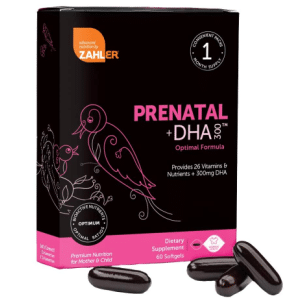
Zahler Prenatal +DHA
Choosing the right prenatal vitamin is one of the most important things you can do for a healthy pregnancy, and the Zahler Prenatal +DHA is my top recommendation. It is made with high-quality nutrients like the active form of folate and bioavailable iron, plus omega-3s you will not find in most other prenatal vitamins. Save 35% off in the month of September.
Save 35% in September
VTech RM7968 Video Baby Monitor
The VTech RM7968 is built for parents who want clear video and full room coverage. You get 4K video, a 7-inch HD parent unit, and 360-degree pan, tilt, and zoom to follow your baby's every move.
- 4K video camera, 7-inch HD parent unit
- 360-degree pan, tilt, and zoom
- Free remote access via phone or tablet, no subscription fees

8 Sheep Organics
8 Sheep Organics makes 100% clean, natural pregnancy products. From skin care to relief for common pregnancy symptoms, every product comes with a 100-day Happiness Guarantee.
Save 10% at 8 SheepThis post includes sponsored content and affiliate links. Some brands compensate me for featuring their products, and I earn a commission on affiliate purchases. Your support helps power the Pregnancy Podcast.

