
Vaginal tears are one of the most common parts of birth that expecting mothers are not prepared for. More than half of women experience some degree of tearing during a vaginal birth. The rates are even higher for first-time mothers. The good news is that there are evidence-based strategies you can use during pregnancy and labor to reduce your risk.
This episode covers what tearing is, how common it is, what the different degrees mean, and what factors increase your risk. You will learn about perineal massage, warm compresses, labor positions, and other methods backed by research. If you do experience a tear or an episiotomy, there is a lot you can do to promote healing and make yourself more comfortable. Whether you are planning your first birth or preparing for another, understanding your options puts you in a better position to prevent tearing and recover well if it happens.
Listen Now
This episode is made possible with support from our sponsors. I appreciate your support for the brands that help power this podcast.
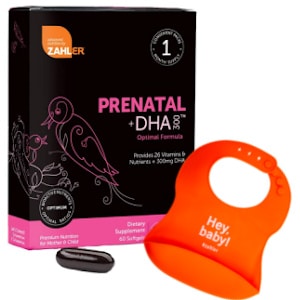
FREE Silicone Baby Bib & 30% off the Zahler Prenatal +DHA on Amazon with code PREPODHA30. The Zahler Prenatal +DHA is made with high-quality nutrients like the active form of folate and bioavailable iron. Plus, it includes essential nutrients like omega-3s that you will not find in most other prenatal vitamins.
Valid through 3/31/26. Email your order number and mailing address to [email protected] to get your free silicone baby bib. (The current promo code is always available here.)

The VTech Advanced HQ Max is built for parents who want an easy-to-use, secure monitor without the need for Wi-Fi or apps. With a large 7” screen and crisp, real-time video the Advanced HQ Max is perfect if you want private, no-fuss monitoring with premium features. As the #1 Baby Monitor Brand in North America, VTech is trusted by millions of families. Click here to check out the Advanced HQ Max and use the code VTPODCAST20 to save 20%.

Wink: Stories for Better Bedtimes is a podcast with a collection of bedtime stories designed to help your little one relax and create calming, mindful moments of connection at bedtime for you and your child. Subscribe to Wink: Stories for Better Bedtimes wherever you listen to podcasts.
Article and Resources
The Perineum
Your perineum is the area between your vaginal opening and your rectum. During the second stage of labor, when you are pushing your baby out, this area stretches significantly. Your baby’s head has the largest circumference of their body. As it emerges, your skin and the underlying muscles stretch to accommodate it. Once the head is out, the rest of the body follows quickly because there is less stretching involved. Your perineum is a sensitive area. It is completely normal to experience pressure, a stretching sensation, or discomfort during this stage of labor.
Crowning and the Ring of Fire
The moment when your baby’s head becomes visible and stays visible at the vaginal opening is called crowning. You may hear this referred to as the ring of fire. The name comes from the burning or stinging sensation some women feel as their skin stretches. Not every woman experiences this sensation, and for those who do, the intensity varies. If you have an epidural, you may feel pressure but not pain. If you are having an unmedicated birth, this is often described as the most intense part of pushing.
The key thing to know about crowning is that it is brief. Once your baby’s head is out, the most intense stretching is over. If you are feeling this sensation, it means you are very close to meeting your baby. This is also the point in labor when the techniques we will discuss later in this episode, such as slow pushing and warm compresses, are most effective at reducing the risk of tearing.
How Common Is Tearing?
Tearing during vaginal birth is very common. A study found that the rates of tearing with a first baby are around 90% and decrease to approximately 69% in subsequent births. According to the American College of Obstetricians and Gynecologists, the rate of some degree of laceration during all vaginal births is between 53% and 79%.
The wide range in those numbers reflects that the likelihood of tearing depends on many factors. These include whether it is your first birth, the size and position of your baby, the type of delivery, and the preventive measures used during labor. While these numbers may sound high, it is important to know that most tears are mild, heal well, and do not cause long-term complications.
Classifying Vaginal Tears
If you do experience tearing, your doctor or midwife will classify it by degree based on how deep the tear extends. There are four degrees, with the first being the most minor and the fourth being the most severe.
First-degree tears only involve the skin around the vaginal opening or perineal skin. These are the mildest types. They may or may not require stitches and usually heal within a few weeks. You might notice some burning or stinging with urination, but these tears generally cause minimal discomfort.
Second-degree tears go deeper and involve the perineal muscles, the muscles between the vagina and the anus that help support your uterus, bladder, and rectum. A second-degree tear usually requires stitches. Your care provider will typically repair this in the delivery room using local anesthesia. It generally heals within a few weeks.
Third-degree tears involve injury to the anal sphincter complex, which is the ring of muscles that surrounds your anus. Fourth-degree tears are the most severe and extend through the perineal muscles, the anal sphincter, and into the tissue lining the rectum.
Third and fourth-degree tears are sometimes referred to as obstetric anal sphincter injuries, or OASIS. These tears are much less common than first or second-degree tears and may require repair in an operating room. Recovery can take months, and some complications can include fecal incontinence and painful intercourse. The good news is that with proper repair and follow-up care, most women recover well, even from more severe tears.
Risk Factors for Tearing
Understanding the factors that increase your risk of tearing can help you make informed decisions about your birth. Some risk factors are outside of your control. Others may be influenced by the choices you and your care provider make during labor.
Vaginal birth is the single biggest risk factor. If you have not given birth vaginally before, your perineal tissue has not been stretched in this way. The risk of tearing is significantly higher than in subsequent births.
Baby’s size and position also play a role. We know from research that a baby weighing over 4,000 grams (about 8 pounds 13 ounces) is an independent risk factor for both second-degree tears and severe tears involving the anal sphincter. The ideal position for your baby during delivery is occiput anterior, which means the back of their head is facing your belly, and they are looking toward your spine. In this position, the smallest diameter of the head leads the way through the birth canal. A baby in the occiput posterior position, where they are facing up rather than down, increases the likelihood and severity of tearing because a larger diameter of the head presents during delivery.
Assisted vaginal delivery, meaning the use of forceps or a vacuum to help your baby come out, increases the risk of tearing. Forceps, in particular, are associated with a significantly higher risk of severe tears compared to vacuum extraction. A large population study of over 70,000 instrumental deliveries in Norway found that the rate of severe tears was approximately twice as high with forceps as with vacuum delivery.
A prolonged second stage of labor, in which the pushing phase lasts longer, can also increase the risk. This is because the tissue is under sustained pressure for longer. Research has found that a longer second stage is significantly associated with increased odds of severe tearing, and the risk increases the longer the pushing phase continues.
Other factors associated with increased risk include a fast or precipitous delivery, in which the tissue does not have time to stretch gradually, and a history of severe prior tears. Maternal age is also a factor. Research shows that older maternal age is associated with increased risk of severe tearing. The relationship between epidural use and tearing is nuanced. An epidural can affect your ability to feel when and how to push. This may lead to a longer pushing phase or a greater need for assisted delivery, both of which increase the risk of tears. However, some research has found that epidural use may actually be protective against severe tears, possibly because it allows for more controlled pushing. The evidence is mixed, and this is something worth discussing with your care provider.
While you cannot control all of these factors, being aware of them helps you have informed conversations with your care provider and take advantage of the prevention strategies we will discuss next.
Episiotomy: What It Is and How It Is Performed
An episiotomy is a surgical incision made to your perineum during the second stage of labor. It is performed with a scalpel or scissors and is done with local anesthesia. If you have an epidural, you likely will not feel the incision at all. If you have not had any anesthesia or it has worn off, your care provider will inject a local anesthetic to numb the tissue before making the cut. You will not feel them making the incision or stitching it up afterward. If you feel anything during the repair, ask for another injection of local anesthetic. There is no reason for you to be in pain during this procedure.
There are two types of episiotomy incisions. The first is a midline or median incision, which is made vertically. This is the easiest type to repair, but it carries a higher risk of extending into the anal area. The second is a mediolateral incision, which is made at an angle. This type offers better protection against tears extending to the anal area, but can be more painful during recovery and more difficult to repair.
Research shows that a midline incision results in more deep perineal tears. Otherwise, there was no statistically significant difference between the two types. The type of incision used is usually at the discretion of your care provider. If you have a preference, this is something you may want to discuss before you go into labor.
After an episiotomy, your care provider will stitch the incision with absorbable sutures, which dissolve on their own over time. The repair process is similar to repairing a tear and typically happens in the delivery room shortly after your baby is born.
The Evidence on Episiotomy
Episiotomy was once one of the most common surgical procedures in obstetrics. By the late 1970s, over 60% of vaginal births in the United States included an episiotomy. The thinking at the time was that a clean surgical cut would be easier to repair than a jagged tear and that an episiotomy could prevent more severe tearing. Research has since shown that this is not the case.
A landmark review published in the Journal of the American Medical Association in 2005 found that the evidence does not support the benefits traditionally attributed to routine episiotomy. In fact, outcomes can be worse with an episiotomy. Some women who would have had a lesser injury or no tear at all instead had a surgical incision. Women who had an episiotomy were more likely to experience pain with intercourse in the months after birth. Plus, were slower to resume sexual activity.
In 2006, the American College of Obstetricians and Gynecologists advised against routine episiotomy, and the World Health Organization also recommends against routine use.
Since these organizations issued these updated recommendations, episiotomy rates have dropped significantly. A study published in JAMA in 2015 found that episiotomy rates had decreased to around 11.6% of vaginal births nationally. The decline has continued. According to the 2023 Leapfrog Maternity Care Report, the average national episiotomy rate was 4.6%. The Leapfrog Group, which tracks hospital quality metrics, has set a standard of 5% or less. This is an area where evidence has made a real difference in practice.
While routine episiotomies are no longer standard practice, providers still use the procedure in certain situations. According to ACOG, there is insufficient evidence-based criteria to define the exact indications for episiotomy, and restrictive use remains the best practice. The most common reasons a care provider may perform an episiotomy are shoulder dystocia, an operative vaginal delivery with forceps or a vacuum, or a situation where your baby needs to be delivered quickly.
Episiotomy With an Assisted Delivery
An assisted delivery is when your care provider uses forceps or a vacuum to help your baby come out. If you have an assisted delivery, the role of episiotomy changes. A study found that during a forceps delivery, performing an episiotomy reduced the risk of perineal tears of all degrees. When researchers analyzed the type of incision, mediolateral episiotomies appeared to be more protective against perineal trauma in women undergoing forceps delivery. This is a situation where an episiotomy may be beneficial, and it is worth discussing with your care provider before labor if forceps or vacuum-assisted delivery is a possibility.
Preventing Tearing and Episiotomy
The good news is that there are evidence-based things you can do both during pregnancy and during labor to help reduce your risk of tearing. Some of these are strategies you practice ahead of time, and others involve specific techniques or tools used during labor. If you can reduce the likelihood of tearing, you also reduce the likelihood of needing an episiotomy. Let’s go through each of these.
Perineal Massage During Pregnancy
Perineal massage is a technique you do in the weeks leading up to birth to help your perineal tissue stretch more easily during delivery. Before starting perineal massage, check with your care provider to make sure it is appropriate for you. There are some situations where perineal massage may not be recommended, such as if you have placenta previa, vaginal bleeding, or an active vaginal infection.
To do a perineal massage, begin with clean hands and a lubricant, such as coconut oil, olive oil, or a water-based lubricant. Place your thumbs about an inch inside your vagina. Press down toward your rectum and to the sides until you feel a stretching sensation. Hold that position for one to two minutes while slowly massaging the lower half of your vagina in a U-shaped motion. Think of it like stretching a muscle. You want to feel the stretch, but it should not be painful. You can do this yourself or involve your partner.
A Cochrane review of four randomized controlled trials involving nearly 2,500 women found that perineal massage significantly reduced the incidence of trauma requiring suturing and reduced the likelihood of having an episiotomy. These benefits were most significant for women who had not given birth vaginally before. Interestingly, the review found that the benefits decreased with higher frequency. Women who performed perineal massage about 1.5 times per week had a 16% reduction in the need for sutures. Those who did it more frequently, between 1.5 and 3.4 times per week, saw only an 8% reduction.
There is no consensus on the ideal frequency or duration, and recommendations range from once or twice per week to daily, typically starting around 34 to 36 weeks of pregnancy. Based on the research, starting in the last four to six weeks of pregnancy and doing it one to two times per week appears to be a reasonable approach. There is no guarantee that perineal massage will prevent a tear, but the evidence suggests it may reduce your risk, especially if this is your first vaginal birth.
Perineal Massage During Labor
Separate from the massage you can do at home during pregnancy, your care provider can also perform perineal massage during the second stage of labor. This involves your care provider inserting two fingers into the vagina and applying downward pressure in a rotating and gentle sweeping motion onto the perineum, typically using a lubricant. A randomized controlled trial of 1,340 women evaluated perineal massage during labor and found similar results for first and second-degree tears and episiotomies in both the massage and control groups. However, there was a significant difference in the rates of third-degree tears. In the group without massage, the rate was 3.6%, compared to 1.2% in the group that received perineal massage during labor.
A more recent systematic review and meta-analysis supported these findings, showing that perineal massage during labor could be effective in reducing the risk of severe perineal trauma, specifically third and fourth-degree tears. This intervention requires your care provider’s involvement. That means if you are interested in this, you need to discuss it with your doctor or midwife in advance and consider including it in your birth plan.
Warm Compresses
Applying a warm compress to your perineum during the second stage of labor can increase blood flow and soften the tissue and muscles in the area. If you are considering a water birth, the warm water surrounding your perineum works on a similar principle, increasing blood flow and softening the tissue.
A randomized controlled trial found that warm compresses applied to the perineum during pushing significantly reduced the incidence of second and third-degree tears and reduced pain intensity both during the second stage of labor and after birth.
Applying a warm compress during labor is not something you can easily do on your own, so you will need to enlist help from your partner, doula, nurse, midwife, or doctor. If this is something you want, include it in your birth plan, so your support team is aware of it ahead of time. This is a common, well-supported practice, and birth workers regularly assist with it. There is no reason to feel embarrassed about requesting it.
Lubricants
Using a lubricant, like warmed mineral oil, during the second stage of labor can decrease friction and may help your baby slide out more easily. A systematic review and meta-analysis of randomized controlled trials found that lubricants may reduce the incidence of perineal trauma, especially second-degree lacerations, and shorten the duration of the second stage of labor. Like warm compresses, this is an intervention you will need assistance with during labor, so enlist the help of your doula, nurse, or care provider.
Slow Pushing and Breathing Techniques
Your first instinct is probably to push your baby out as quickly as possible, but there are real benefits to slowing down this process, particularly as your baby is crowning. Slow pushing is an excellent way to give your perineum more time to stretch gradually. To slow down pushing, try exhaling while pushing. This means breathing slowly in and out while you push, rather than taking a deep breath, holding it, and bearing down. It may also help to make a low or deep sound as you push. When your baby’s head starts to emerge, you can switch to short, gentle pushes.
These techniques help the tissue stretch gradually rather than all at once. It can be very hard to remember these techniques in the moment, so talk about them with your partner, doula, and support staff before labor. They can remind you and guide you through breathing and pushing when the time comes. See the episode on breathing during labor for more ways to incorporate breathwork into your labor strategy.
Labor Positions
The position you are in during the pushing stage of labor can affect the amount of pressure on your perineum and your risk of tearing. The most common position in a hospital setting is on your back in bed, but this position actually puts more pressure on your perineum. Positions in which you are upright, kneeling, or on all fours leverage gravity to help your baby descend and reduce the need for forceful pushing. Squatting and side-lying can open your pelvis and allow more room for your baby, which may also reduce the risk of perineal trauma. Evidence-based research supports the use of upright and squatting positions to shorten the second stage of labor. The best position for your labor may change as it progresses, and you should feel free to move and try different positions. See the episode on labor positions for a deeper look at the evidence.
Putting Prevention Strategies Together
Many of the interventions aimed at preventing tearing carry little or no risk. Perineal massage takes a small time investment to learn and practice. Warm compresses, lubricants, and breathing techniques are low-cost and straightforward. Labor positions are free and within your control. On its own, any single strategy may only modestly reduce your risk. But when you stack several strategies together, the cumulative effect can make a real difference. A woman who has practiced perineal massage during pregnancy, uses warm compresses during labor, labors in an upright position, and practices controlled breathing is in a much stronger position to reduce perineal trauma than someone relying on just one approach. The takeaway is that you do not have to choose just one of these; you can stack them.
Healing After a Tear or Episiotomy
Even with the best preparation, tearing can still happen, and that is okay. If it does, there are many things you can do to support your recovery and make yourself more comfortable. If you experience a tear or an episiotomy, your perineum will be sore, especially when you walk or sit. For first and second-degree tears, most women feel significantly better within a few weeks. For more extensive tears, the tenderness can last longer, and full healing may take several months. It is important to set realistic expectations for your recovery so you can give your body the time it needs.
There is a lot you can do to give yourself relief, reduce discomfort, and promote healing. Your care provider may recommend prescription or over-the-counter pain medications. Let’s go through additional strategies that many women find helpful.
Cooling and Postpartum Healing Pads
Cooling can provide significant relief when your perineum is sore and swollen after birth. Ice packs, chilled maxi pads, and witch hazel pads can all help reduce swelling and discomfort. Witch hazel has astringent and anti-inflammatory properties, which is why it is commonly recommended for postpartum healing. You can find witch hazel pads at most drug stores and retailers. They are the same pads commonly used for hemorrhoids, and they work well for perineal soreness.
One popular DIY option is postpartum healing pads, often called padsicles. These are easy to make and feel amazing during the first few days of recovery. To make them, combine ingredients like witch hazel, aloe vera gel, and a few drops of lavender oil. Spread or spray the mixture onto regular maxi pads, layer them with aluminum foil to prevent them from sticking together, and freeze them. Freezing them in a bowl gives them a slight curve, which makes them more comfortable to wear. These are most effective during the first few days postpartum when swelling and discomfort are at their peak. You do not need to fill your entire freezer. About 12 to 20 pads is a good starting point, and they are easy to make more of if needed.
Padsicle Supplies:
- Postpartum Pads or Maxi Pads
- Witch hazel
- Aloe vera gel
- 2-4 ounce spray bottle
- Lavender essential oil (optional)
- Aluminum foil
Padsicle Directions:
Fill up the spray bottle with witch hazel. If using lavender essential oil, add 5-10 drops to the spray bottle. Open up the pad and spread a thin layer of aloe vera gel on it with your hands or a butter knife. Spray the pad with your witch hazel mixture; you want it damp, not soaked. Wrap pads in aluminum foil so they do not stick together. Place them in a zip-lock bag in the freezer. Bonus tip: Set them in a large mixing bowl so they freeze with a curved shape, which makes them more comfortable to wear. Keep the remaining mixture in the spray bottle for a postpartum soothing spray.
Sitz and Herbal Baths
A sitz bath or herbal bath can provide relief and promote healing. A sitz bath is a small plastic tub that fits over your toilet. You fill it with warm water and sit in it. They are inexpensive, usually around $10 to $15. If you do not want to deal with the separate tub, sitting in a warm bath in your regular bathtub works too. You can add ingredients to the warm water for additional soothing and healing benefits. Common additions include Epsom salt, baking soda, witch hazel, herbs such as plantain leaf, yarrow, and calendula, and essential oils such as lavender and chamomile. There are many DIY recipes available online, and you can also find pre-mixed sitz bath salts designed for postpartum care.
Going to the Bathroom
After a tear or episiotomy, urinating can sting when urine comes into contact with the healing tissue. Your hospital or birth center should send you home with a peri bottle. This is a small plastic squeeze bottle you fill with warm water. You squeeze warm water onto your vaginal area while you urinate, and it helps dilute the urine so it does not sting. It also works well for gentle rinsing afterward. During the early days of healing, you may want to pat dry gently with a tissue or air-dry rather than wiping.
Many new mothers are understandably nervous about having a bowel movement after birth. The key is to avoid straining, which can put pressure on your healing perineum. Make sure you are getting plenty of fiber in your diet and staying hydrated. Constipation is a common side effect of labor pain medications, and your care provider may recommend a stool softener. Please check with your doctor or midwife before taking anything, even over-the-counter medications, especially if you are breastfeeding. One practical tip is to press a clean pad or a witch hazel pad against the wound while passing a bowel movement. This provides gentle counter-pressure and can reduce both discomfort and the sensation of stretching. It is probably worse in your head than it will be in reality.
Moving Around and Getting Comfortable
The first few days after birth are usually the most uncomfortable for moving around. Listen to your body. If walking does not feel great, hold off on going for walks. Your job right now is to rest and heal. There will be plenty of time for everything else later. Sitting on a pillow or padded ring can take the pressure off your perineum. Some breastfeeding pillows, like the Boppy pillow, are surprisingly comfortable to sit on during recovery.
How Your Partner Can Help
Your partner can make a big difference in your recovery, especially in the first few days. The more they can minimize the amount of walking and moving you have to do, the better. This means bringing you water, changing the baby, and grabbing what you need. It helps to set up stations around your home before birth with essentials like diapers, wipes, water, snacks, and your phone charger, so everything is within reach. The first few days are the most challenging, and as you heal, it gets significantly easier to move around.
Medications
Your care provider may prescribe pain medication or recommend over-the-counter options like ibuprofen or acetaminophen. They may also recommend a stool softener. Whatever you take, make sure your doctor or midwife approves it, especially if you are breastfeeding. The LactMed database is an excellent resource for checking the safety of specific medications during breastfeeding.
Signs to Watch Out For
As you are recovering, keep in mind that healing takes time. Keep taking your prenatal vitamin, eat well, and stay hydrated. All of these things support healing. A tear or episiotomy will not heal overnight, but you should see gradual improvement. If you have any concerns about not healing well, see your doctor or midwife. Signs you should contact your care provider include worsening pain, a fever, or pus-like discharge from the wound. These could be signs of an infection, and you want to get care right away.
There is also something known as granulation tissue, which happens when the tissue gets stuck in the healing process. If you notice that your healing has stalled or something does not seem right, do not wait. Your care provider can treat granulation tissue with silver nitrate, which helps restart the healing process.
Long-Term Recovery and Pelvic Floor Health
For most women with first or second-degree tears, full recovery happens within a few weeks to a couple of months. For third and fourth-degree tears, the timeline is longer, and some women may experience symptoms like discomfort during intercourse or mild incontinence for several months. These symptoms usually improve over time, but it is important to know that they are not something you should simply accept or ignore.
Care providers increasingly recommend pelvic floor physical therapy for women recovering from more severe tears. A pelvic floor physical therapist can assess the strength and function of your pelvic floor muscles and develop a tailored plan to help you recover. Even if you had a mild tear or no tear at all, pelvic floor physical therapy can be beneficial postpartum. If you are experiencing any ongoing issues with pain, incontinence, or discomfort with intercourse, bring this up with your care provider. These are treatable issues, and you deserve support in addressing them.
Regarding when to resume sexual activity, there is no universal timeline that works for everyone. Your care provider will typically advise waiting until your postpartum checkup, usually around six weeks, and until you feel physically and emotionally ready. Be patient with yourself. Communicate with your partner. Keep in mind, it is completely normal for this process to take time.
The Emotional Side of Tearing
Beyond being physically uncomfortable, it is worth acknowledging that tearing or having an episiotomy can be emotionally difficult. Some women feel disappointment, frustration, or are deeply affected by the experience, especially if it was unexpected or felt out of their control. Processing your birth experience is an important part of your postpartum recovery. If you are struggling emotionally with what happened during your birth, please talk to your doctor or midwife. Your feelings are valid, and there is support available.
Talking to Your Doctor or Midwife
If you have specific preferences about an episiotomy or measures you want to take to prevent tearing, please discuss them with your doctor or midwife well before you go into labor. An episiotomy is a procedure that should come with informed consent. Having this conversation ahead of time allows you to talk through the pros and cons, share your position, and make more informed decisions if the situation arises during labor.
Including Preferences in Your Birth Plan
Preventing tearing and your preferences around episiotomy are excellent items to include in your birth plan. Once you decide which preventative measures you want to use during labor, include the key details so your support team knows what you want. For example, if you want warm compresses applied during pushing or your care provider to perform perineal massage during the second stage, make sure that is clear. As you create your birth plan, work with your doctor or midwife to make sure they support your preferences. You can manage some techniques, such as breathing and positioning, independently. Others, such as warm compresses and lubricants, require assistance.
The Pregnancy Podcast has many resources to help you craft a birth plan:
- Guide to Creating Your Birth Plan
- Get a copy of Vanessa’s birth plan
- Your Birth Plan book
- Become a Premium Member for a FREE copy of the Your Birth Plan book and access to every single episode ad-free
Thank you to the brands that help power this podcast.
FREE Silicone Baby Bib & 30% off the Zahler Prenatal +DHA on Amazon with code PREPODHA30.
Zahler goes above and beyond using the latest scientific research to formulate their Prenatal +DHA with high-quality nutrients like the active form of folate and bioavailable iron. Plus, it includes essential nutrients like omega-3s that you will not find in most other prenatal vitamins. Not all prenatal vitamins are created equal. This vitamin is carefully formulated with the nutrients you and your baby require in the optimal ratios for absorption, metabolism, and safety.
Valid through 3/31/26. Email your order number and mailing address to [email protected] to get your free silicone baby bib. (The current promo code is always available here.)
Save 20% OFF the VTech Advanced HQ Max with the code VTPODCAST20.
VTech offers a wide range of baby monitors designed for today’s modern parents. As the #1 Baby Monitor Brand in North America, VTech is trusted by millions of families to deliver crystal-clear HD video, reliable performance, and strong night vision. The Advanced HQ Max is built for parents who want an easy-to-use, secure monitor without the need for Wi-Fi or apps. With a large 7” screen and crisp, real-time video, it provides reliable monitoring without lag. The Advanced HQ Max is perfect if you want private, no-fuss monitoring with premium features. Click here to check out the Advanced HQ Max.
Wink: Stories for Better Bedtimes is a podcast with a collection of bedtime stories designed to help your little one relax and create calming, mindful moments of connection at bedtime for you and your child. There are no ads, no interruptions, and each episode is fifteen minutes or less. They are sensory-aware, which means they help calm restless bodies and encourage interaction between you and your little one. It’s time to discover a better bedtime. Subscribe to Wink: Stories for Better Bedtimes wherever you listen to podcasts.

